

Now, for the first time, there is a specialised high performance programme that has been designed specifically for Indian sports administrators. The programme is being conducted by ELMS Sports Foundation, a not-for-profit institution under the guidance of Olympic gold medallist Abhinav Bindra.
The inaugural programme will be attended by 15 officers of the Sports Authority of India (SAI) and will also include participants from 22 states and leading Indian sports organisations, like the Gopichand Academy, the Padukone Academy, OGQ, Tata Sports and others. The inaugural programme will see 62 administrators take part from across the country.
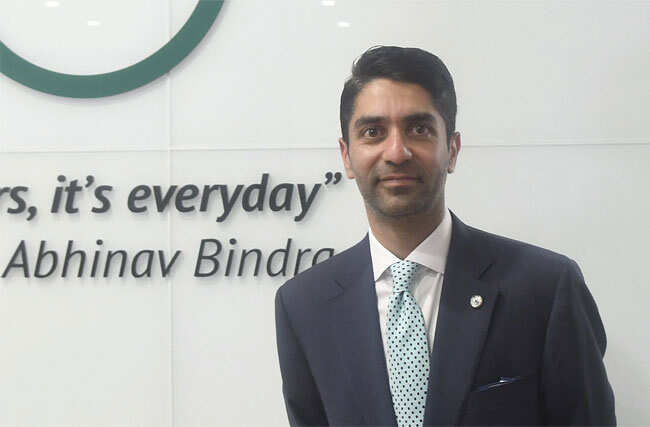
On the occasion of the launch of this venture helmed by Abhinav Bindra, India’s lone individual Olympic gold medallist spoke to TimesofIndia.com about his vision to empower sports institutions in the country to serve athletes better and take Indian sport to the next level.
Excerpts….
You are now venturing into something very exciting again. A high performance sports leadership programme for sports administrators in India. What made you and the ELMS Foundation think that this is something that is needed in Indian sport?
I think for Indian sport to get to the next level we have to strive in various ways. Administration and administering sport is a critical element to take sport forward. It’s all well known, the challenges in administration in sport and the gaps that we have if we compare it to global best practices in this field. We all want to see professionals coming into the picture in leading Indian sports forward. But then it comes to the critical question – where are the professionals? It’s all nice to make a nice statement by saying we want professionals to come into Indian sport but if we look deeper into it we also have to ask ourselves – where are these people? Of course there are people who are there and who may not have enough of a background in high performance sport and in the critical elements that are needed to administer sport because sport is very unique in nature, because sport can never be broken down into black and white. You have to have a very deep understanding of the dynamics of sport. It is with that thought process that we started out. The ELMS Foundation was founded and I had been an advisor to them and I did advise them that this is a very critical element, if you really want to contribute to the Indian ecosystem. Indian sport has progressed and evolved over the last few years. We have made tremendous progress in various elements. If you see the support that our athletes are getting you can even match it to world standards. However, to take Indian sport to the next level it is about empowering the institutions that run Indian sport and more importantly people who run Indian sport, people who administer Indian sport. Success in sport is all about doing the day to day efficiently. Whether it is athletes training or whether it is coaching or whether it is recovery or whether it is administering sport. The day to day has to be very efficiently done. And with that in mind we set out on this path to put together something that can help our administrators, which can enable them, empower them to create sports leaders for tomorrow. I do believe it is a critical element for the development of sport in India and I am delighted to see this coming to fruition to a certain level. Of course the Covid situation has changed the dynamics of it a little bit but the situation also gives us a great opportunity to roll something out and have all the participants get a feel of what we are trying to deliver. With that in mind, the ELMS Foundation, along with the Abhinav Bindra Foundation, which is the knowledge partner set out on this path. Over the last year or so we put in a lot of work putting it all together and I am delighted to see this coming through. Just attending a 15 module course is not going to solve every problem or solve every challenge that Indian sport faces. However, I think it will do something positive and it will be the start of something which hopefully will take Indian sport to greater heights.
Abhinav Bindra and Pullela Gopichand. (Photo credit: ELMS Sports Foundation)
What would be the salient points of focus of the inaugural programme for sports administrators?
For me the most important thing was putting together something which is relevant to the Indian context. If you just cut, copy and paste it doesn’t work. The Indian sporting environment is unique. The challenges that we have are different from other nations. To contextualise it to the Indian environment is something which is very important to me. We did a lot of background work for this. Studying and researching the Indian system, talking to every possible stakeholder in Indian sport and understanding the pain points, understanding the challenges. We are starting off with five pillars. Starting with 1) Sports Organisational Development – That means developing and managing Olympic, National, Ministerial, IOA, National Sports Federations and other sports organisations and creating a high performance culture within these organisations. 2) Emotional Intelligence in leadership – I think this is very very critical and very very critical to the Indian context as well. Sports leaders require these critical skills when managing athletes. Athletes are very unique human beings. We are very sensitive human beings, we do our best to work every single day to put our heart and soul into it. And our minds work differently. So, to understand and to have that emotional intelligence to deal with athletes is a very very critical and important element. Understanding the psychology of an athlete is very critical to leadership. The administrators many times have a different point of view and that is fine. But how does one gain consensus, how does one bring the athletes on board and how does one communicate with athletes? So this emotional intelligence and leadership I think is very very important. 3) Talent ID and development – I think identifying talent in a scientific way is something which is very important to me and very important to how sport is evolving in the rest of the world. We can’t just expect champions to come and we can’t just expect some athlete to spring up. We need to create these champions and we have to find the right people, we have to find people in a very scientific way and use science to do this talent identification. That is knowledge that will be imparted there. 4) Strategy to deliver – I think it’s all about implementation. That has always been a challenge in Indian sport. We have terrific schemes sometimes on paper but how does one then efficiently implement these ideas, these thoughts. So, giving them the understanding on how best to implement different ideas. And 5) a concept called STEAM (Science Technology Engineering Analytics and Medicine) – This is a very very critical element in world sport , you can’t do without it. The scientific approach to athletes’ performances is something which is critical if we want to meet our aspirations at the Olympic level. Giving the leaders of tomorrow a very thorough understanding of it. I would like to see this implemented down to the grassroot level. Once we see these elements of science coming into grassroot level sport, the ecosystem of sport will really change. These are five things which are very very important in the interim period. Of course there are several others
The programme will be delivered largely by faculty from Loughborough University. What made you zero in on them?
Loughborough is rated the best sports University in the world. There is a tremendous amount of knowledge that played a critical role in the development of sport in the UK, which has really seen a revolution in the last few Olympic cycles. I personally visited them and I have seen what they do and there is no doubt that they are the best in the world in what they do. We’ve put together faculty who are leaders in what they do. That is something which was very important to me. We had to bring in the best, the best practices. I think there will be tremendous learning from the experiences that they have had over several decades involved in high performance sport
As someone who keeps a very close eye on the evolution of Indian sport, what changes – positive or negative have you observed in Indian sports administration from when you started shooting to now?
I think there are several people involved in Indian sport who have their heart in the right place and want to genuinely see the development of Indian sport. You talk about shooting for example, we have made tremendous strides in that sport and that could not have been done without the National federation doing something right. So there are definitely several organisations who are doing good work. However, it is about empowering them further to take their organisations to a different level. I think each of these organisations struggle to find people, high quality people to get involved in their day to day functioning who have vast experience in sport and running sport and running high performance sports. This lot of people just does not exist in India. That’s the intention we have – to build these lots of people and to empower people and empower the next generation of leaders who will lead Indian sports to greater heights. As you said there has been good work which has been done. There are good organisations. There are some which are not so great. The overall idea is to find solutions to challenges and move forward. I think there’s no point just figuring out what the problem is but the whole idea is to solve the problem and find positive solutions to it and that’s the intention of this course
What would your message be for Indian athletes, especially those who have already qualified for the next edition of the Olympics, at a time when the Olympics have been postponed and when staying focussed is proving to be rather difficult?
An athlete’s life is all about adaptability. Elite athletes do possess the skill of adaptability because performing at the highest level is all about adaptability. This is a scenario that has been thrust upon not just them but the entire world and it’s all about adapting to it, accepting the situation, rejigging your plans, keeping yourself, most importantly mentally stimulated and mentally in a happy space. That is very important I think. Some athletes may be struggling to train because of the restrictions, but maybe it’s about utilising the time to develop a different skill. But, the most important thing is keep your mind fresh, keep your mind occupied with something positive and I am sure when the situation settles down, which it eventually will, I think with a couple of months of quality training they will be back to where they were. So, they should not be too worried about that aspect, but I think the most important aspect is to keep yourself mentally in good shape.


